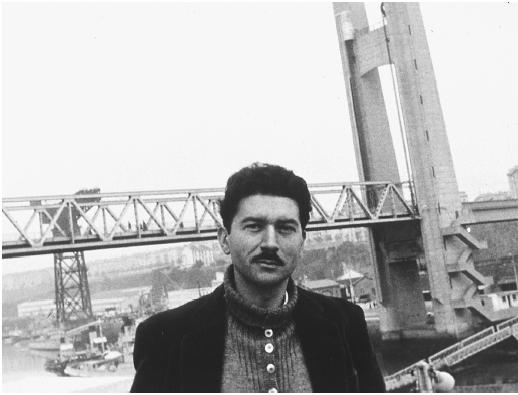
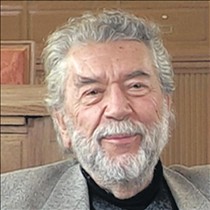
 Alain Robbe-Grillet is celebrated as a writer and exponent of the nouveau roman--even in cinema he is best known as the screenwriter of Alain Resnais's Last Year at Marienbad. But Robbe-Grillet's subsequent screenplays he directed himself, and the man was no slouch in that department either, as his upcoming series at Yerba Buena will make clear.
Robbe-Grillet's cinema exhibits many of the trademarks of his literature: dreams, games, repetition, temporal ambiguity, conflation of the real and the unreal--the imagined, the fictional, the possible, the impossible. Often he gives these specifically cinematic renderings: the impassive gazes of incidental characters, moved not by their own psychologies but perhaps reflecting the protagonist's; the disquieting "what is wrong with this picture?" moments--famously, the impossible shadows of Marienbad, or the unusual billiard table in Trans-Europ-Express, which hint at incongruities on a grander scale; the creative development of cinematic space, sometimes obscuring or even denying that which is not visible in frame, sometimes using the edge of the frame itself as a physical constraint on movement.
He claimed his work is not directly psychological, but everything in it seems psychologized--though it's often unclear whose psychology it is. Similarly, everything has meaning, but what does it mean? Fans of Lynch and Cronenberg will see in Robbe-Grillet's films a precursor to the ambiguous narrative layering and body-fetishism of these Anglophone directors.
Yerba Buena's series starts with the reasonably accessible Trans-Europ-Express, in which Robbe-Grillet and Jean-Louis Trintignant find themselves on the titular train, en route from Paris to Antwerp. Robbe-Grillet has decided to make a film, and dictates its story into a tape recorder. Trintignant is his protagonist, a prospective smuggler (thus allowing us some good old-fashioned gangster movie hi-jinx, not to mention a dose of S&M, at this level of the "narrative"). Of course it's not that straightforward, and the film incorporates self-revisions and other delightful transgressions.
Next is Resnais's notoriously enigmatic L'Année dernière à Marienbad (Last Year at Marienbad), which recounts the encounters, in a stately hotel and its grounds, between a man and a woman who may have met before, and may have even more than that in common. As does anyone who's seen this film, I have my own theories, and it would be wrong to try to further color the experience of the novice viewer.
Robbe-Grillet's directorial debut, L'Immortelle, is as much a riddle as Marienbad. Here the mystery is confined not to an estate but to Istanbul, and not to the last year, but to Byzantine history. A man meets a woman, after a while she slips away, he searches. The woman is peculiar, timeless. Immortal? Certain moments, certain gestures resonate--a close-up of the woman's face (later put into context), the man observing her through blinds. Somehow, revolving around the gravitas of these moments, a sense of destiny binds them.
Also showing are Eden and After and The Man Who Lies, neither of which I've yet seen. New prints of all are promised, and I can say that in the cases of Trans-Europ-Express and L'Immortelle (both, unlike the cinemascope Marienbad, shot spherically), they look fantastic.